
Carb Confusion: Why Some Women Become More Carb-Sensitive After 40 (And What to Do About It)
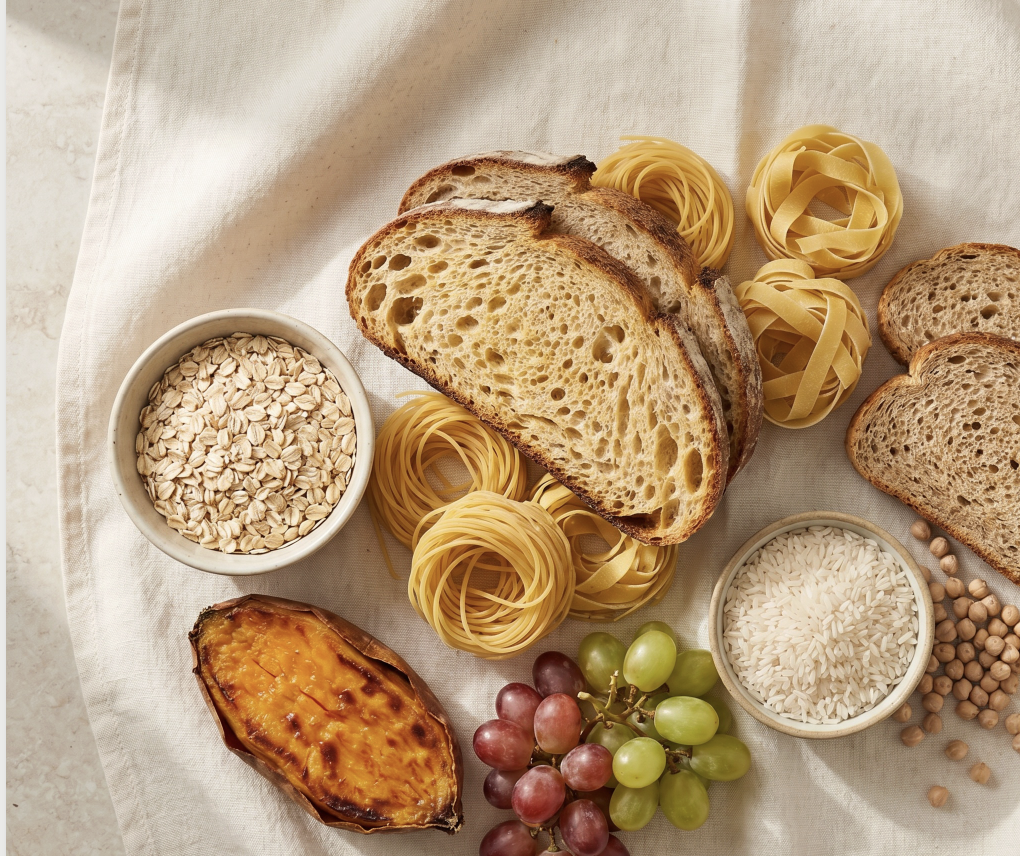
We’ve heard you say it:
“I used to eat carbs and be fine… now I just look at them and gain weight.”
“Should I cut carbs completely? Or am I just doing it wrong?”
We get it because we have had the same experiences.
For years, I was always a little wary of carbs. I leaned toward clean, whole-food eating, watched portion sizes, and followed the usual “rules” of balance. But something shifted in my 40s. Suddenly, what used to work stopped working.
Now at 47, I (kind of) joke that I can look at a bowl of pasta and feel my jeans tighten.
What I eventually realized is this: it’s not simply that carbs are “bad.” It’s that our hormones, metabolism, and even our brain chemistry change in midlife, and carbs interact differently with that evolving biology.
So no, it’s not in your head. It’s in your hormones, your metabolism, and your nervous system.
Why Carbs Feel Different After 40
Carbohydrates are not the enemy. But as women age, our ability to process and metabolize them can shift dramatically.
Here’s what’s happening behind the scenes.
1. Estrogen Decline Changes Blood Sugar Response
Estrogen plays a major role in insulin sensitivity. This means it helps your body move glucose out of the bloodstream and into cells efficiently.
As estrogen declines during perimenopause and menopause, that process becomes less efficient. The result is this:
Higher blood sugar spikes after carb-heavy meals
More insulin is released to compensate
Increased fat storage, especially around the midsection
More energy crashes and cravings
It can feel like a frustrating cycle: crave carbs, then crash, and then of course, crave more carbs. For many women, this is the first time they truly notice how strongly food affects their energy, mood, and weight.
2. Your Brain Changes Too
One of the most fascinating conversations happening in women’s health right now is around the menopausal brain.
Research discussed in Brain Food explains that the female brain becomes more metabolically sensitive during menopause. As hormonal shifts occur, the brain becomes less efficient at using glucose for fuel and begins leaning more on ketones (fat-based energy).
That transition can contribute to brain fog, mood swings, fatigue, and an intense craving for carbs. Your body isn’t “broken,” it’s adapting, and contrary to what diet culture tells us, the answer usually isn’t extreme restriction.
Instead, many women feel better when they choose higher-quality carbohydrates, pair carbs with protein and healthy fats, and eat in ways that support steadier blood sugar.
3. Gut Health and Gluten Sensitivity Can Increase
Many women also notice that gluten-heavy foods have a more intense feeling in midlife.
Maybe it’s:
More bloating
Puffiness
Fatigue
Joint discomfort
Skin flare-ups
This doesn’t necessarily mean you have a gluten allergy or celiac disease. But hormonal changes can influence gut health, inflammation, and immune sensitivity, making some foods harder to tolerate than they once were.
For some women, reducing highly processed or gluten-heavy foods can noticeably improve energy and digestion.
So… Should You Cut Carbs Completely?
Probably not because carbs serve important functions in the body. They support brain function, hormone production, exercise recovery, mood regulation, and thyroid health
The goal isn’t “no carbs,” rather the goal is becoming more intentional about which carbs you eat, how you combine them, and when you eat them.
A Smarter Midlife Approach to Carbs
Choose Carbs That Nourish
Focus on complex, fiber-rich carbohydrates that digest more slowly and provide steadier energy.
Great options include:
Sweet potatoes
Quinoa
Lentils
Berries
Butternut squash
Beets
Gluten-free oats
Wild rice
These foods also contain antioxidants, minerals, and nutrients that support brain and hormone health.
Pair Carbs with Protein and Healthy Fat
Avoid eating carbs “naked.” Combining carbs with: Protein (eggs, fish, tofu, chicken, Greek yogurt) or healthy fats (avocado, olive oil, nuts, seeds) helps slow glucose absorption and keeps energy more stable.
This translates to fewer crashes, fewer cravings, and better satiety.
Time Them Strategically
Many women do better eating most of their carbs earlier in the day, around workouts, or after movement, when insulin sensitivity is naturally higher
A protein-forward breakfast with moderate complex carbs is often far more stabilizing than a sugary coffee-and-pastry start.
Experiment with Gluten-Free Eating
You don’t need to become obsessed with labels.
But a short-term, real-food-based gluten-free experiment may help you notice whether inflammation, bloating, or fatigue improves.
The key is focusing on whole foods, not simply swapping everything for packaged gluten-free snacks and desserts.
Stop Fearing Carbs
Fear creates stress. Stress affects hormones. Hormones affect metabolism.
Your body doesn’t need punishment. It needs support.
Carbs are not a moral issue. They’re information, fuel, and communication. The more you understand your body’s changing needs, the less confusing food becomes.
The Bottom Line
At Alluvita, we believe carbs aren’t the enemy; they’re part of an equation.
Your hormones, your brain, your metabolism, your gut, and your lifestyle are dynamic, and we must adjust to what feels good for each of us.
We teach women how to work with their biology instead of fighting against it. It takes understanding to build strength, mental clarity, and metabolic flexibility without obsessing over every bite.
Your relationship with food gets to evolve as you do, and you deserve to feel nourished, empowered, and clear on what actually works for your body now.
You belong here. Learn alongside other women experiencing similar changes with nutrition.
This content is for informational purposes only and is not medical advice. Always seek the guidance of a qualified healthcare provider before making any changes to your diet, exercise, or health routines.
