
Rest to Rise: Why Quality Sleep Is Non-Negotiable in Midlife Wellness
We’ve heard you say:
“I’m tired, but I can’t sleep.”
“I fall asleep fine, but I’m wide awake at 3 a.m.”
We get it, because I’ve been there too.
During my time in competitive bodybuilding, I wore my OURA ring religiously, using it to track my sleep quality, recovery, and readiness. I was attuned to how sleep affected my strength, hormones, and performance, so I made daily adjustments based on that data.
But after I stepped away from the competition life, I also stepped away from my ring. I thought I didn’t need the same level of precision. Life got busier, and my focus shifted. Sleep became more of a luxury than a priority.
That is… until the 3 a.m. wake-ups started happening, and continued.
I felt wired and restless at night, groggy in the morning, and totally disconnected from my body’s rhythm. That’s when I realized: something had to change.
I started wearing my OURA ring again, and with that, I rebuilt my evening routine. This went from blue-light boundaries to consistent wind-down rituals. The data didn’t just show me how I slept. It helped me make smarter decisions about how I lived.
And the results? Better recovery, fewer wake-ups, more energy, and the clarity I’d been missing.
I share this because I know what it’s like to push through exhaustion, and I also know how powerful it is to finally choose rest as a tool, rather than a treat.
The Science Behind Sleep
Sleep is when your body repairs, resets, and rebalances, especially in midlife, when hormonal shifts disrupt everything from blood sugar to body temperature to mood. In perimenopause and menopause, declining estrogen and progesterone affect melatonin production, cortisol rhythms, nervous system regulation, and deep and REM sleep cycles.
Dr. Matthew Walker, author of Why We Sleep, explains that sleep deprivation impacts nearly every system in the body. Sleep deprivation can have impacts like increasing the risk of heart disease and stroke, mood disorders, cognitive decline, weight gain and insulin resistance, accelerated aging, and inflammation.
Meanwhile, Dr. Andrew Huberman emphasizes how morning light, stable circadian rhythms, and temperature regulation play a central role in regulating sleep hormones. This is especially true for women dealing with night sweats, anxiety, and restless thoughts.
Your body wants to rest. It just needs the right support throughout the day.
Here’s Where to Start in Making Sleep a Priority
1. Get light early
Aim for 10–15 minutes of natural light within 60 minutes of waking. It helps anchor your internal clock (Huberman protocol).
2. Wind down with intention
Avoid screens 1 hour before bed. Instead, journal, stretch, read, or breathe. Signal to your body that it’s safe to power down.
3. Sleep cool and dark
65–68°F with blackout shades and light-blocking masks can improve both deep and REM sleep quality.
4. Balance blood sugar before bed
A light, protein-based snack (like turkey or chia pudding) can prevent the 3 a.m. cortisol spike that wakes many women up.
5. Use tools with care
The OURA ring or other sleep trackers can offer valuable feedback. Use the data as a guide (not a judgment) to help you adjust your day around your energy, and remember to ultimately listen to your body.
6. Be consistent
Go to bed and wake up at the same time daily, even on weekends. Rhythm is more important than perfection.
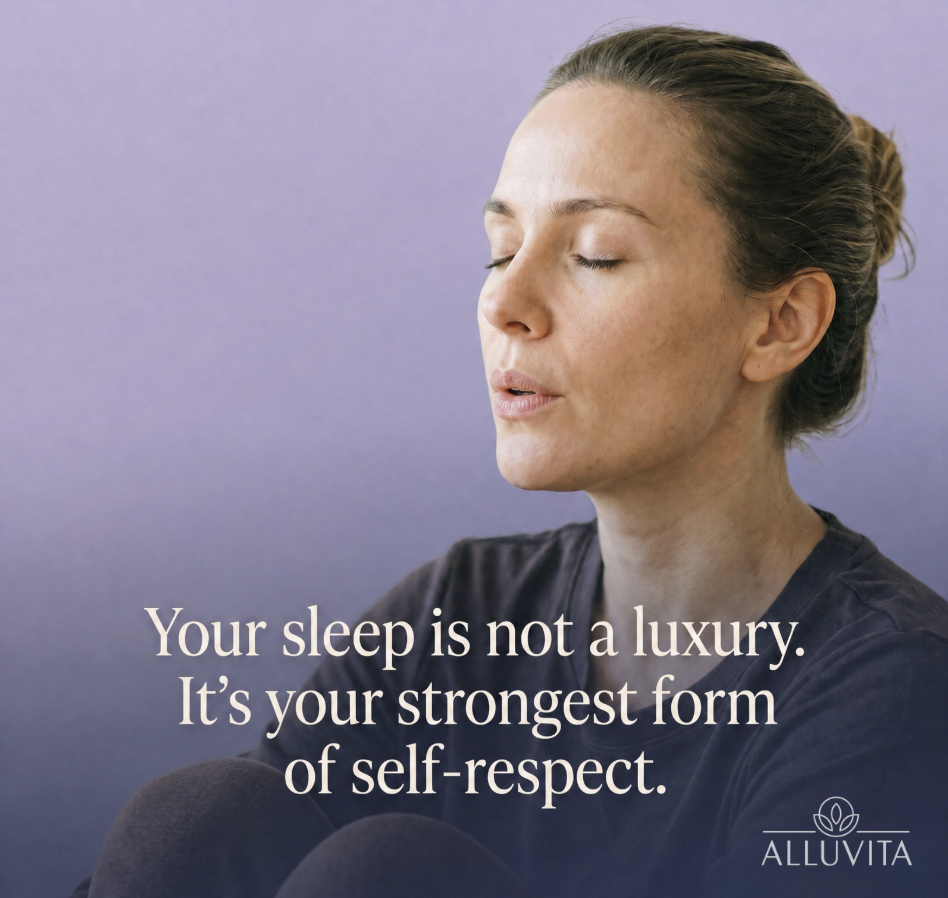
Most of all, permit yourself to rest. Not when everything’s done. Not as a last resort. Make rest a vital, foundational, non-negotiable part of your health.
Let’s Rest and Rise as One
At Alluvita, we don’t celebrate burnout; instead, we celebrate recovery. We believe sleep is the cornerstone of sustainable wellness, especially for women navigating life transitions, hormone shifts, and leadership roles in their own lives. This is why, alongside Alluvita Social Wellness, we are creating the Alluvita Wellness Clinic for women to learn more about their own health needs and shifts.
We’re creating a culture where rest is respected, not rushed, and where women learn to read their rhythms, not fight them.
You belong here. And your rest matters.
This content is for informational purposes only and is not medical advice. Always seek the guidance of a qualified healthcare provider before making any changes to your diet, exercise, or health routines.
